
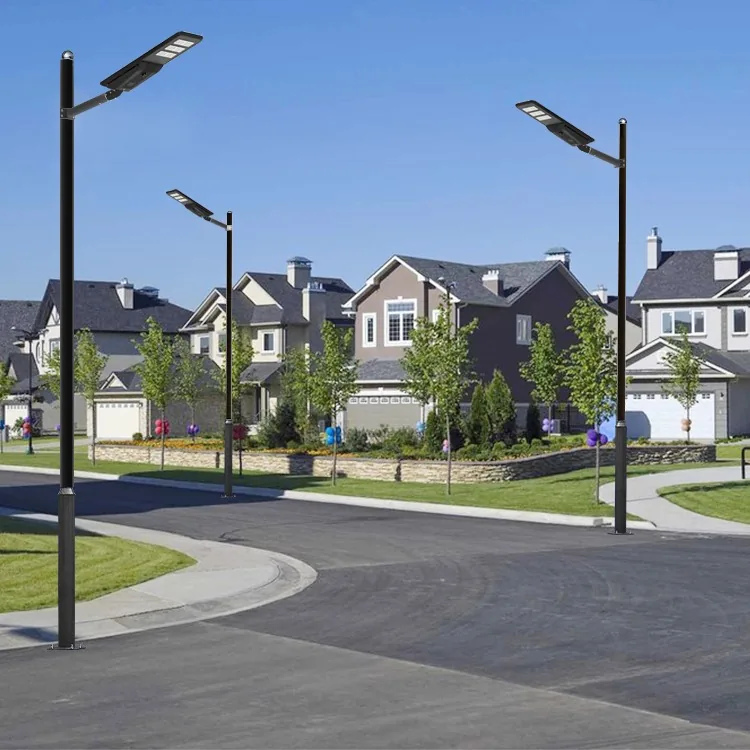
Every buyer in this category has lived the same story. A sample arrives, it looks right, it lights the walkway, the client signs off. Five hundred pieces ship. Then, one rainy season later, the complaints start — not about the light output, but about everything else.
Garden lighting is the cheapest line on the bill of quantities and the most visible thing in the park. When it fails, nobody blames the specification. They blame the supplier.
Here are the five failures that survive the sample stage and only surface around month 18 — plus what to ask before you place the order.
In a solar garden light the battery is the first component to reach end of life. If the pack is buried in a sealed housing with no service path, a dead cell turns a working fixture into scrap — and in a 200-piece park installation that is 200 replacements, not 200 repairs.
Ask where the pack sits, what chemistry it is, and what happens at year four. A sunken battery box, a glued-down cover, or a "maintenance-free" answer with no detail are all the same answer: throw it away.
We build our garden fixtures around an integrated LiFePO4 pack and controller inside the lamp body. That removes the separate battery box that floods, gets stolen, or corrodes at the cable entry — and LiFePO4 gives the cycle life to make that integration last.
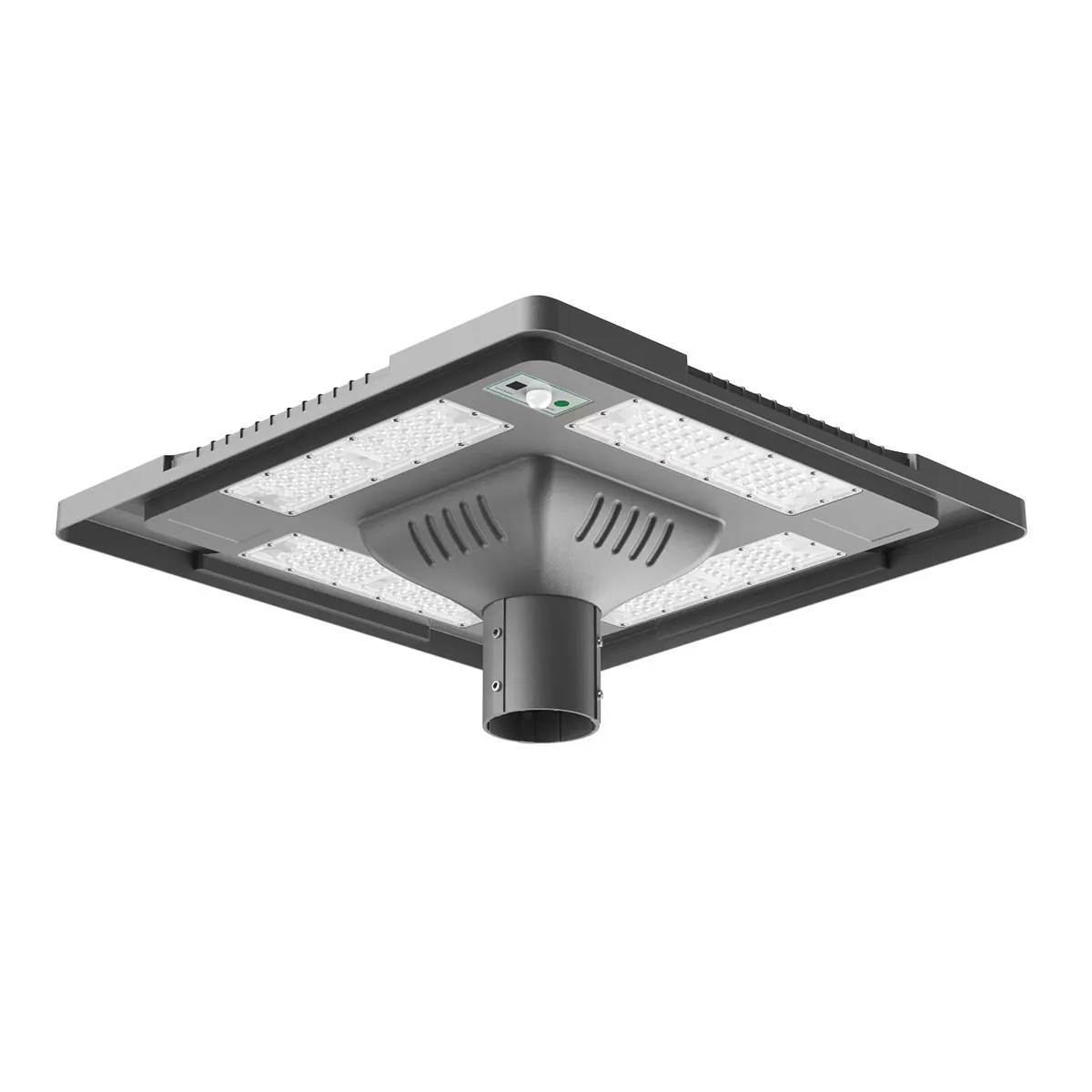
A waterproof claim is easy to print and hard to verify. Water does not enter through the middle of a die-cast body; it enters at the seam, the lens gasket and the cable entry — and those are exactly the places a datasheet never describes.
Instead of asking for a number, ask for the construction: is the housing die-cast or thin-walled, is the lens a separate gasket-sealed part, is the pole sleeve a machined insert or a plastic collar. In coastal and humid sites — Callao, Cartagena, Santos, Guayaquil — an anti-corrosion coating is not a premium feature, it is the difference between year three and year eight.
Everyone checks the LED. Almost nobody checks the lens. Polycarbonate and acrylic both degrade under UV, and the first symptom is not a crack — it is a slow drop in light that crews read as "the battery is getting weak."
This matters more in Latin America than most spec sheets assume. Quito, Bogotá and La Paz sit above 2,600 m, where UV is stronger than at sea level; the same lens that looks fine in a Shenzhen test yard can haze in two summers on a highland plaza.
Our garden fixtures use a high-transparency PC lens rated above 90% transmittance, over imported LED chips chosen for low light decay. Ask for transmittance as a number, and ask whether the lens material is UV-stabilised.
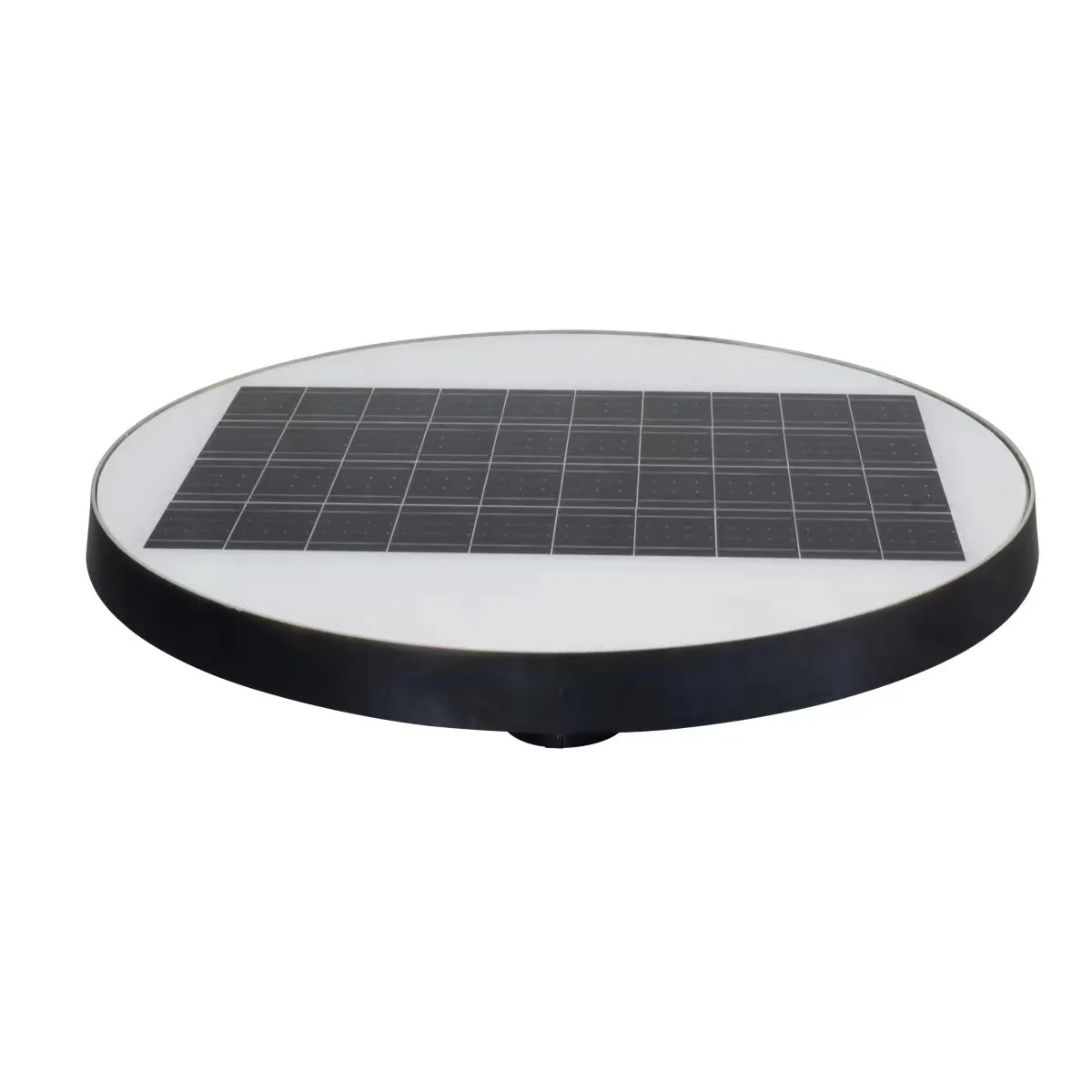
The panel on an all-in-one garden light sits on top of the head — which means the head, not the pole base, has to be in sun. Landscape architects pick a position for how the fixture looks at eye level; two years later the ornamental tree beside it has closed the canopy.
Walk the site at the height the fixture will actually be installed, not at drawing level. Four hours of direct sun is the working minimum; in a park with mature trees, expect to move fixtures rather than upsize batteries.
A fixture that runs at full output from dusk without a schedule will empty its pack before dawn in the wet season. The symptom is not a failure — it is a light that everyone notices is off at the wrong time.
What you want is not "smart" but predictable: light control so it switches itself at dusk and dawn, a time schedule so it can drop output in the small hours when nobody is walking, and a remote so a maintenance crew can change that schedule from the ground instead of from a ladder.
| Question | A weak answer | What you are checking |
|---|---|---|
| Where is the battery, and what chemistry? | "Maintenance-free, sealed" | Whether a dead cell scraps the whole fixture |
| Is the housing die-cast, and is it coated? | "Aluminum" | Whether it survives humid and coastal air |
| What is the lens material and transmittance? | "High-transparency" | Whether output drops on its own in two years |
| Is the lens UV-stabilised? | Silence | Yellowing that gets blamed on the battery |
| Can the schedule be changed from the ground? | "It has a sensor" | Whether every seasonal adjustment needs a ladder |
| Who ages the units before shipment? | "We test samples" | Whether testing is per batch or per unit |
Two bodies, one logic. The square fixture uses an ADC12 die-cast heat sink with a thick anti-corrosion coating and a direct-lighting design, with a high-transparency PC lens over each LED array. The round fixture uses a high-thermal-conductivity aluminum PCB and an efficient heat sink to keep the temperature rise low, with brackets for pole and arm mounting.
Both are integrated: LiFePO4 pack and controller inside the lamp body, automatic light control, time control and remote control, charging by day and switching on at dusk. No wiring, no trenching, no separate battery box to flood.
That is not a claim about being the best garden light in the world. It is a set of decisions about which parts fail first, made in the order they fail.
How long should a solar garden light last? The housing and LED should outlast the battery by a wide margin. The practical question is whether the battery can be replaced or whether its failure ends the fixture — that answer, not the LED lifetime figure, decides the real service life.
Do I need IP65 for a garden light? For anything installed outdoors year-round in a wet climate, yes — and the number matters less than the joint design. Ask which part of the fixture was tested, and how the lens and cable entry are sealed.
Why do my garden lights dim after the first year? Most often the battery has lost usable capacity, or the lens has started to haze. Both look identical from the ground, which is why the lens material and transmittance belong in the purchase specification.
Can solar garden lights work under trees? Only if the head gets direct sun for at least four hours. If the canopy will close over the fixture, relocate it or use a separate panel on a cable; adding battery capacity does not solve a shading problem.
Are these lights for residential gardens only? No. The same bodies are used for commercial exteriors, public parks and pathway lighting, which is why the mounting brackets cover both pole and arm installation.
Do you provide a lighting layout? Send the path width, mounting height and spacing, and we will check the layout before you commit to a quantity — it is cheaper to move a fixture on paper than in a park.
Get a quote or see the garden light specification.
Our 25-engineer team provides free project consultation and fast, accurate quotations.
Get a Quote