
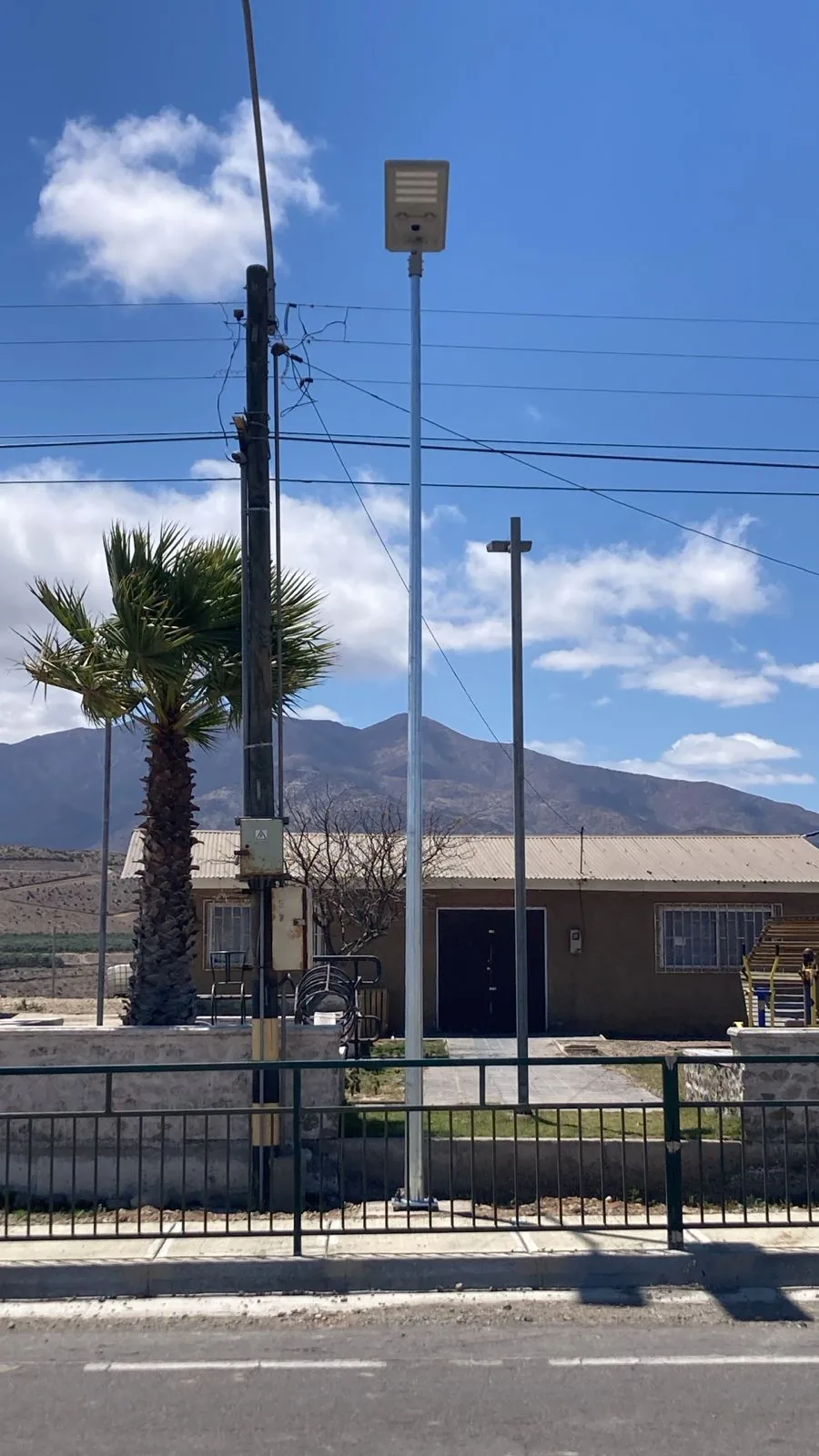
It is six in the evening and the sun is down. Children do their homework under kerosene lamps, the village main road is pitch black, and the only light comes from the headlamp of an occasional passing motorcycle.
This is not a scene from a film. It is daily life in thousands of off-grid villages across Africa, Southeast Asia and Latin America.
When the national grid will not reach the village for years, what can bring reliable, affordable lighting to its public spaces — the roads, the school yard, the village square?
A diesel generator? Extending the grid? A solar lantern for every household? Or solar street lights? This article puts the four options side by side, and shows why the all-in-one LED solar street light is often the best answer for off-grid villages.
Any village without grid power lives with the same three limits:
So any lighting option must satisfy three conditions: easy to install, low-maintenance, and built to last.
| Pros | Cons |
|---|---|
| Stable and reliable once connected | Very high upfront investment |
| Powers many kinds of appliances | Long construction period, slow approvals |
| Mature technology everyone knows | A monthly electricity bill, forever |
Verdict: unless the main grid is within 1–2 km, the economics simply do not work. For a village of a few dozen households, the cost of extending the line would buy several hundred solar street lights.
| Pros | Cons |
|---|---|
| Generates electricity immediately | Fuel is a bottomless, ongoing cost |
| Runs high-power equipment | Loud and polluting |
| Equipment is easy to buy | Refuelling every day, oil changes on schedule |
Verdict: a generator running 10 hours every night burns RMB 3,000–7,000 of diesel per month. Most villages cannot carry that cost — and when the generator breaks down, nobody in the village can fix it.
| Pros | Cons |
|---|---|
| Clean energy, zero electricity bills | Covers indoor lighting only, not public areas |
| Simple to install | Batteries need replacing every 3–5 years |
| Independent from house to house | Fifty solar lanterns still will not light one village road |
Verdict: a good solution for household lighting, but it does not solve public-area lighting. The village road, the school yard and the market square stay dark.
| Pros | Cons |
|---|---|
| Completely off-grid — shines wherever the sun reaches | Higher upfront cost than a single lantern |
| No wiring or trenching; mounts on any pole | Battery capacity is finite; long cloudy spells reduce autonomy |
| Nearly maintenance-free; lithium battery lasts 5–8 years | Needs at least 4 hours of effective sunshine per day |
| Turns on at dusk, off at dawn — no one has to manage it | |
| Can be bought in batches: 10 lights this year, 20 more next year | |
| LED light source lasts over 50,000 hours — more than a decade of use |
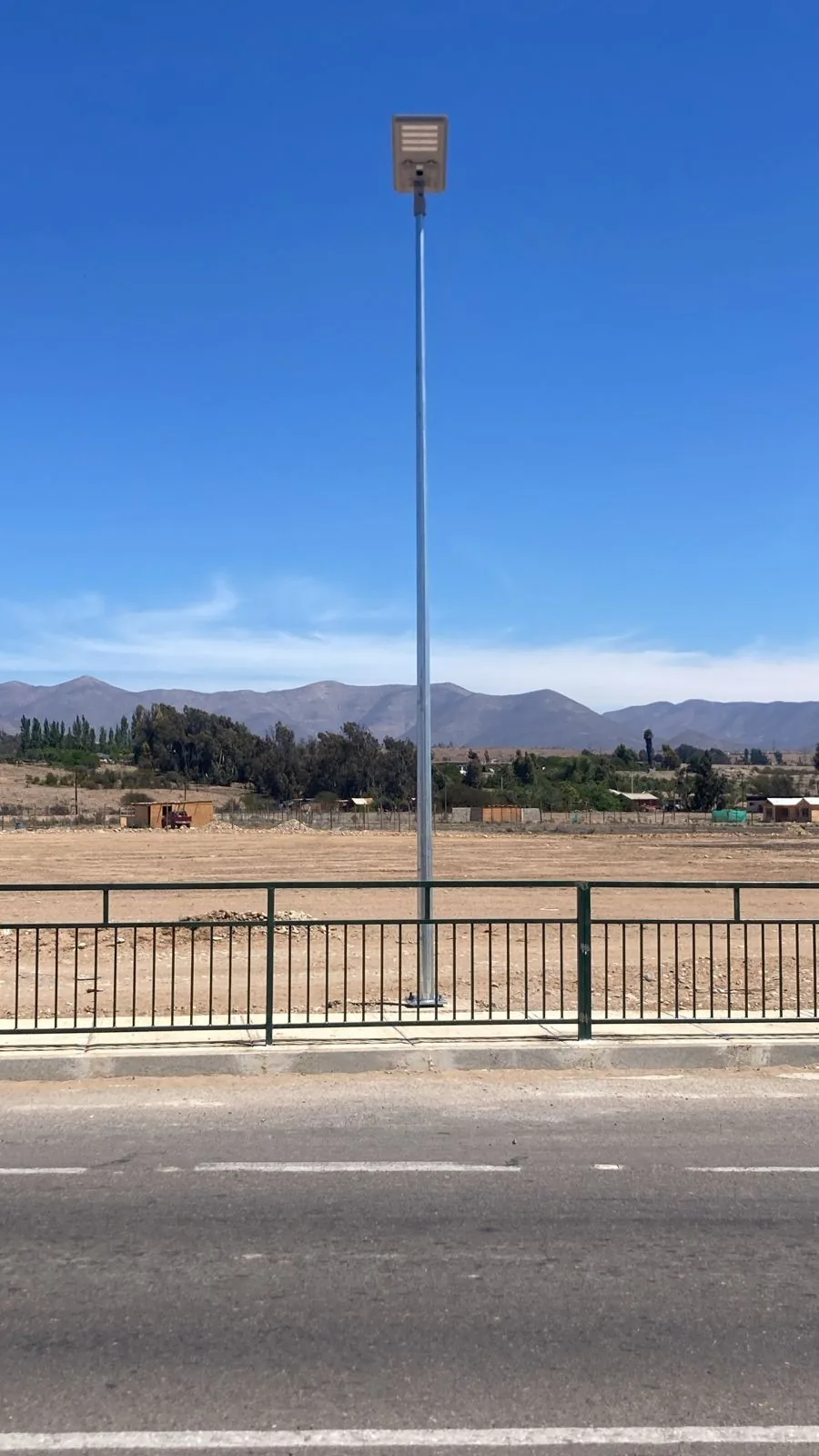
Verdict: the most practical option for public lighting in off-grid villages. One light covers about 50 metres of road, and a school yard needs only 4–6.
Take one lighting point (equivalent to a 100 W conventional fixture) and add up five years of spending:
| Option | Equipment cost | 5 years of energy + maintenance | 5-year total |
|---|---|---|---|
| Grid connection | About RMB 1,500 (pole + line + fixture) | About RMB 4,200 (electricity + line losses) | About RMB 5,700 |
| Diesel generator | About RMB 10,000 (generator + tank + fixtures) | About RMB 42,000 (diesel + oil + repairs) | About RMB 52,000 |
| All-in-one solar street light | About RMB 3,200 (complete unit) | About RMB 350 (battery swap after year five) | About RMB 3,550 |
Over five years, the solar street light saves roughly 38% against grid extension — and roughly 93% against the diesel generator.
One person, one spanner, 30 minutes — that is one all-in-one solar street light installed. No electrician, no trenching, no concrete foundation. In regions short of skilled workers, this matters more than any specification.
Even if the grid reaches the village one day, the solar street light keeps running on its own. When a blackout hits, it stays on — a huge advantage in developing countries where the power supply is unreliable.
Not every solar street light survives off-grid duty. When procuring, focus on these five points:
The all-in-one solar street lights at szluxey.com meet all five: models from 30 W to 150 W, certified LiFePO4 batteries and intelligent controllers, designed for off-grid deployment.
In 2024, we supplied 85 units of the AIOH 60W all-in-one solar street light to a village in Eastern Province, Zambia. The feedback one year on:
For villages without grid power, the all-in-one LED solar street light is today's lowest-total-cost, easiest-to-install and highest-social-benefit option for public lighting.
If you are a contractor, an NGO procurement officer or a government planner looking for lighting for a rural community, visit szluxey.com to browse our range. We provide free lighting design and sample support — lighting lives with the sun.
Questions? Not sure which model suits your village project? Email info@szluxey.com or visit szluxey.com for a quotation.
Our 25-engineer team provides free project consultation and fast, accurate quotations.
Get a Quote